

Swollen Car Battery Causes: Is It Safe? 7 Critical Warning Signs You Can’t Afford to Ignore
Did you pop the hood and find your battery bulging at the sides like it’s about to burst? If you’re searching for Swollen Car Battery Causes: Is It Safe? (risks & Quick Solutions), the direct answer is no — a swollen battery is never safe to keep using or ignore.
A puffed-up case means dangerous pressure is building inside. Furthermore, that pressure can lead to acid leaks, electrical failure, or even a sudden explosion. Therefore, you should treat it as an urgent safety issue, not just a cosmetic flaw.
Throughout this guide, we will explain exactly what swollen car battery causes are and whether it is safe for everyday drivers. In addition, you will learn why it happens, what risks you face if you keep driving, and the quick, safe steps to handle it without putting yourself at risk.
What Does a Swollen Car Battery Actually Look Like?
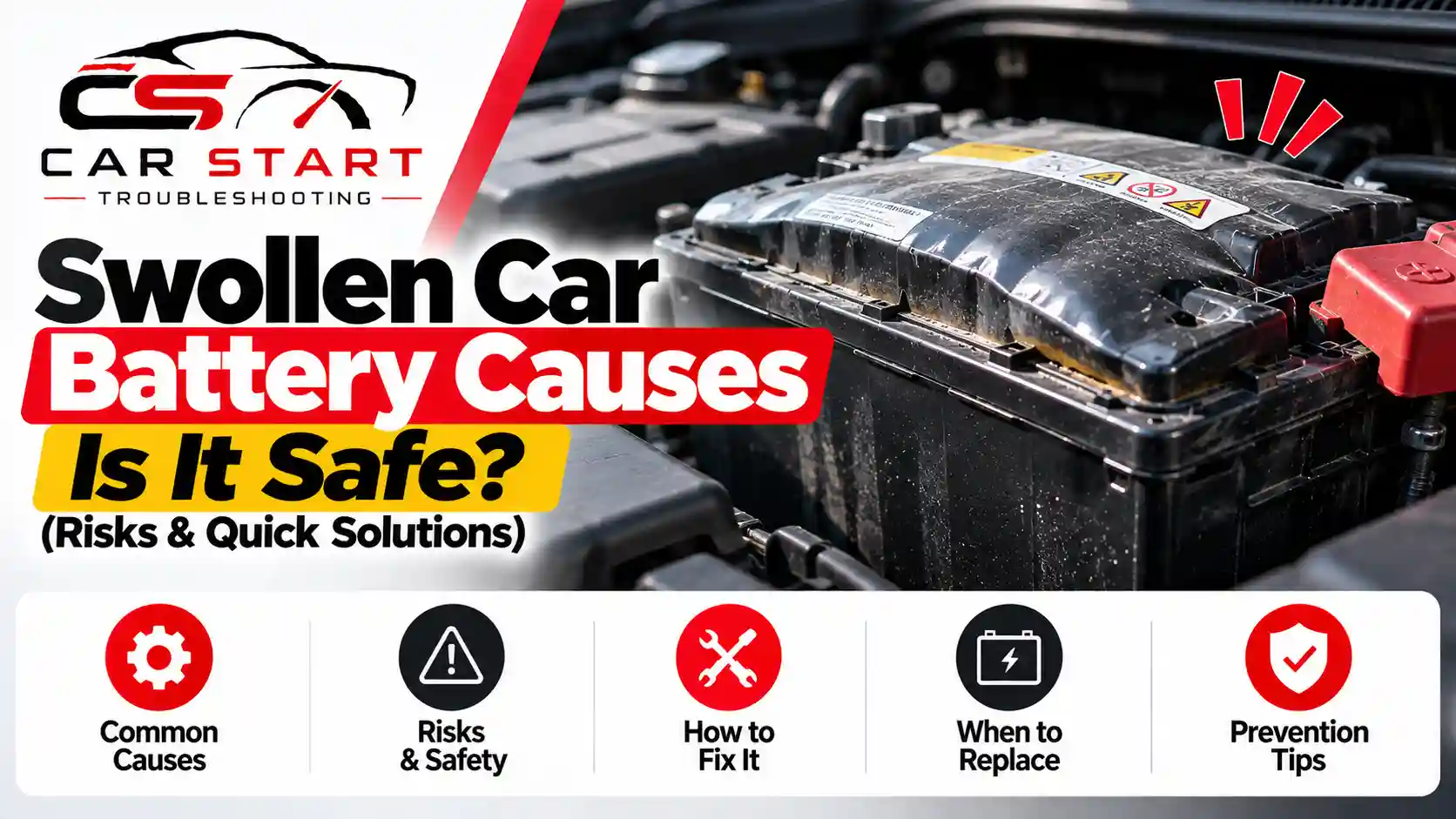
A healthy 12-volt car battery should have perfectly flat, straight sides. However, a swollen one will look bloated, rounded, or warped, almost as if the plastic case has been inflated from within.
Sometimes the swelling is subtle and only visible from the top. In other cases, the sides push out so far that the battery no longer sits securely in its tray. Consequently, it may feel tight or stuck when you try to wiggle it.
You might also notice other clues alongside the bulge. For example, the case may feel unusually hot, you might smell rotten eggs, or you could see a white, powdery corrosion around the terminals.
The Science Behind a Bloated Battery Case
To understand why a battery swells, you need to know what is happening inside. Car batteries contain lead plates submerged in sulfuric acid and water, which creates a chemical reaction to produce electricity.
During normal charging and discharging, small amounts of hydrogen gas are produced. Normally, this gas vents slowly and safely. However, when something goes wrong, gas builds up much faster than it can escape.
As a result, internal pressure increases dramatically. Because the outer case is sealed plastic, it has nowhere to go and begins to expand outward. Therefore, the swelling you see is essentially a pressure vessel warning you it is about to fail.
How Excess Gas and Heat Create Pressure
Heat is the biggest accelerator of this process. When temperatures rise, the chemical reaction inside speeds up and produces more hydrogen gas than usual.
Furthermore, overcharging forces even more energy into the battery than it can handle. This excess energy converts directly into heat and gas, which consequently inflates the case from the inside.
Many drivers researching Swollen Car Battery Causes: is It Safe? (risks & Quick Solutions) are surprised to learn that both extreme heat and faulty charging can create the same result. In addition, even cold weather can indirectly contribute by making the battery work harder.
Why the Plastic Case Deforms Instead of Venting
Modern maintenance-free batteries have small vent valves, but they are not designed for massive gas buildup. When pressure spikes suddenly, those vents simply cannot keep up.
As a result, the flexible polypropylene case becomes the weakest point. It stretches and deforms to contain the pressure, which is why you see that characteristic bloated look.
Although the case is tough, it is not indestructible. Therefore, a severely swollen battery is always at risk of cracking or rupturing without warning.
Top 7 Reasons Your Car Battery Is Swelling
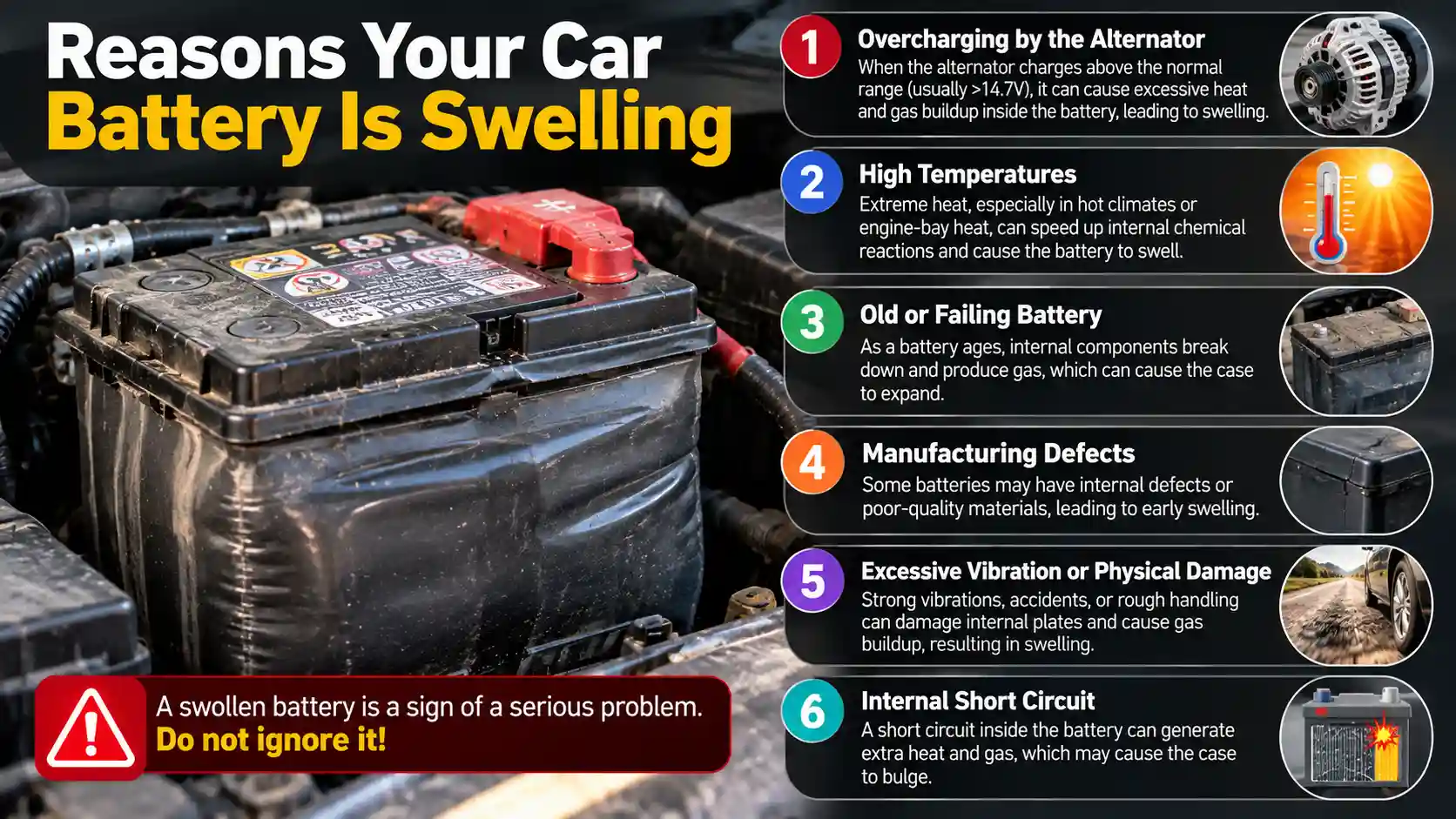
There is never just one random cause for swelling. Instead, it is always a symptom of an underlying electrical or environmental problem. Below are the most common culprits.
- Overcharging from a Faulty Alternator or Voltage Regulator: This is the number one cause. If your alternator pushes more than 14.7 volts, it essentially cooks the battery. Consequently, it boils the electrolyte and floods the case with gas.
- Extreme Summer Heat: Prolonged exposure to temperatures above 90°F (32°C) accelerates chemical activity. Furthermore, heat under the hood can easily exceed 140°F, which warps the case and degrades internal components.
- Defective or Aging Battery: As batteries age past 3-5 years, internal lead plates can shed material and create a short circuit. This internal short causes localized overheating and rapid gas production.
- Using the Wrong Charger: A charger set to too high an amperage or left on for too long will overcharge the battery. Therefore, always use a smart charger with automatic shut-off.
- Blocked Vent Tubes: Some batteries have external vent hoses. If these become clogged with dirt or corrosion, gas cannot escape. As a result, pressure builds even under normal operation.
- Deep Discharge and Jump-Starting Abuse: Repeatedly draining the battery dead and then fast-charging it stresses the plates. In addition, improper jump-starting can send voltage spikes through the system.
- Manufacturing Defect: Although rare, a defect in the separator between plates can cause an internal failure from day one. Consequently, even a new battery can swell if it was poorly made.
If you are still wondering about Swollen Car Battery Causes: is It Safe? (risks & Quick Solutions) in your specific situation, start by checking your charging voltage. In addition, consider the age of the battery and recent weather conditions. Often, the combination of heat and overcharging is to blame.
Is It Safe to Drive With a Swollen Battery?
The short answer remains a firm no. A swollen battery is structurally compromised and chemically unstable. Therefore, driving with it is a gamble you should never take.
Even if your car still starts, the internal damage is already done. Furthermore, vibration from driving can crack the weakened case and cause an immediate acid spill. Consequently, what seems like a minor bulge can turn into a major breakdown in minutes.
Many people ask about Swollen Car Battery Causes: is It Safe? (risks & Quick Solutions) hoping they can wait until the weekend to fix it. However, waiting even a few days dramatically increases the risk of being stranded or causing collateral damage to your vehicle.
Immediate Risks You Face
The most dangerous risk is thermal runaway and explosion. Hydrogen gas is highly flammable, and a spark near a pressurized, leaking battery can ignite it instantly.
Another serious risk is a sulfuric acid leak. The swollen case can develop hairline cracks that seep acid onto your engine bay, cables, and tray. As a result, it can corrode metal, destroy wiring, and cause expensive electrical shorts.
Furthermore, a bloated battery cannot deliver consistent power. Therefore, you may experience flickering lights, slow cranking, or sudden stalling. In modern cars, voltage fluctuations can also damage sensitive computers and sensors.
Can a Swollen Battery Explode?
Yes, although it is not extremely common, it is absolutely possible. When internal pressure exceeds what the case can hold, the battery can burst with surprising force.
This is more likely if you try to jump-start, charge, or puncture a swollen battery. In addition, creating a spark while disconnecting the terminals can ignite vented hydrogen gas.
That is why experts answering Swollen Car Battery Causes: is It Safe? (risks & Quick Solutions) always advise against any DIY puncturing or pressing on the case. The safest approach is to treat it like a hazardous material.
Warning Signs You Should Never Ignore
Swelling is often not the only symptom. Pay attention to these accompanying red flags, because they confirm the battery is failing fast.
First, notice any strange smells. A strong rotten egg or sulfur odor indicates venting hydrogen sulfide gas. Therefore, if you smell this near the battery, ventilate the area immediately.
Second, look for electrical issues. Dim headlights, a slow or clicking start, and a battery warning light on your dashboard all suggest charging problems. Furthermore, you may see the case itself is hot to the touch even after the car has sat overnight.
Third, check for visible leaks or corrosion. A white, blue, or green crust on the terminals combined with a bloated case is a classic sign of overcharging and acid seepage. Consequently, you should not touch the powder with bare hands.
Drivers investigating Swollen Car Battery Causes: is It Safe? (risks & Quick Solutions) often report that their battery looked slightly puffy for weeks before it completely failed. However, by the time you can see the bulge clearly, the internal damage is already severe.
Quick and Safe Solutions: What to Do Right Now
If you have confirmed your battery is swollen, do not panic, but do act methodically. Your priority is personal safety and preventing further damage to the car.
Do not attempt to squeeze, puncture, or compress the battery to make it fit. In addition, never try to charge a swollen battery with a portable charger. That will only increase pressure and risk.
Step-by-Step Safe Removal Process
1. Turn Everything Off and Let It Cool: Shut off the engine, remove the key, and turn off all lights and accessories. If the battery is hot, wait at least 30-60 minutes for it to cool down. Furthermore, work in a well-ventilated area, ideally outdoors.
2. Wear Proper Protection: Put on safety glasses and chemical-resistant gloves. Sulfuric acid can cause severe burns, and therefore, you should also wear long sleeves. Keep baking soda and water nearby to neutralize any accidental spills.
3. Disconnect the Terminals Safely: Always disconnect the negative (-) black cable first, then the positive (+) red cable. This reduces the risk of a spark. If the terminals are heavily corroded or stuck, do not force them with excessive pressure.
4. Remove the Battery Carefully: Lift the battery straight up and keep it upright at all times. Do not tilt or shake it, because acid could leak from the weakened seams. Consequently, place it immediately into a sturdy plastic tray or double plastic bag for transport.
5. Inspect the Charging System: Before installing a new battery, have your alternator and voltage regulator tested at an auto parts store. If you skip this step, your new battery may also swell within weeks. Therefore, this diagnostic is essential.
Anyone searching for Swollen Car Battery Causes: is It Safe? (risks & Quick Solutions) needs to understand that replacement is the only real solution. A swollen battery cannot be repaired, reconditioned, or safely reused. As a result, replacement is not optional.
How to Transport and Dispose of It Properly
A swollen battery is considered hazardous waste. You cannot throw it in the regular trash. Furthermore, many states have laws requiring proper recycling.
Place the battery in your trunk or truck bed, secured so it cannot tip over. Drive directly to an auto parts store, recycling center, or mechanic. Most retailers will accept old batteries for free and may even give you a core refund.
Do not store a swollen battery in your garage or home for days. Therefore, dispose of it the same day you remove it. If you must wait, keep it on concrete in a cool, ventilated area away from children and pets.
Understanding Swollen Car Battery Causes: is It Safe? (risks & Quick Solutions) also means knowing that professional help is the safest route if you feel unsure. If the battery is extremely hot, leaking heavily, or smoking, call roadside assistance instead of handling it yourself.
How to Prevent Your Next Battery From Swelling
Prevention is much cheaper than dealing with corrosion damage or a tow. Fortunately, a few simple habits can dramatically extend battery life and prevent swelling.
First, test your charging system annually. A simple voltmeter check should show 13.7 to 14.7 volts with the engine running. If it is consistently higher, your voltage regulator needs replacement.
Second, manage heat exposure. If possible, park in shade or a garage during extreme summer heat. In addition, ensure the battery heat shield, if your car has one, is intact and properly installed.
Third, avoid short trips that never fully recharge the battery. Furthermore, if you store the car for weeks, use a quality battery maintainer rather than a standard trickle charger. A smart maintainer automatically stops charging when full.
Fourth, keep the terminals clean and tight. Corrosion increases resistance, which makes the alternator work harder. Therefore, clean the terminals every six months with a wire brush and apply anti-corrosion spray.
Finally, replace your battery proactively every 3-4 years, especially in hot climates. An old battery is far more likely to develop internal shorts. Consequently, timely replacement is the best insurance against swelling.
Drivers who have dealt with Swollen Car Battery Causes: is It Safe? (risks & Quick Solutions) often become much more diligent about maintenance. In addition, they learn to recognize early warning signs before the case visibly deforms.
Replacement Tips: Choosing a Safe, Long-Lasting Battery
When buying a new battery, do not just pick the cheapest option. Look for the correct group size, cold cranking amps (CCA), and reserve capacity specified in your owner’s manual.
Consider an AGM (Absorbent Glass Mat) battery if your vehicle supports it. AGM batteries handle heat and vibration better and are less prone to swelling. However, they still require a properly functioning charging system.
Always check the manufacturing date on the new battery. You want one that is less than six months old. Furthermore, ensure the retailer tests it before you leave the store.
After installation, have the charging system re-tested to confirm everything is normal. Therefore, you can be confident the root cause has been resolved. Many cases of Swollen Car Battery Causes: is It Safe? (risks & Quick Solutions) recur because the underlying overcharging issue was never fixed.
When to Call a Professional Immediately
While many drivers can safely remove a mildly swollen battery, some situations demand expert help. If you see active leaking, smoking, or melting plastic, do not touch it.
Similarly, if the battery is so swollen it is wedged tightly in the tray, forcing it out could crack the case. In that case, a mechanic has the tools to remove it safely.
If your car is still under warranty, check with the dealer first. A swollen battery caused by a faulty alternator may be covered. Consequently, you could save hundreds of dollars on repairs.
Remember, the core lesson of Swollen Car Battery Causes: is It Safe? (risks & Quick Solutions) is that hesitation creates danger. Acting quickly, wearing protection, and fixing the charging system are the three pillars of a safe resolution. Furthermore, proper disposal protects both you and the environment.
Can I still drive my car with a slightly swollen battery?
No, you should not drive with even a slightly swollen battery. Even minor swelling indicates internal gas buildup and structural failure, which can lead to sudden acid leaks, electrical damage, or explosion from engine vibration and heat. Furthermore, the battery can fail without warning and leave you stranded. Therefore, the safest option is to have the vehicle towed or replace the battery before driving again, and have your alternator tested to find the root cause.
What causes a car battery to swell and bloat?
The most common cause is overcharging from a faulty alternator or voltage regulator, which forces excess energy into the battery and creates hydrogen gas and heat. In addition, extreme summer heat, internal short circuits from age, using an incorrect charger, and blocked vent tubes can all trap gas inside the sealed case. As a result, pressure builds up and deforms the plastic. Consequently, swelling is always a symptom of an underlying electrical or environmental issue, not a random defect.
Will a swollen car battery explode if I jump-start it?
Yes, jump-starting a swollen battery significantly increases the risk of explosion. The battery is already pressurized with flammable hydrogen gas, and the spark created when connecting jumper cables can ignite that gas. Furthermore, adding more electrical energy to an already overcharged battery raises internal pressure even higher. Therefore, never jump-start, charge, or puncture a bloated battery. Instead, disconnect it safely with protective gear and replace it entirely.
How much does it cost to replace a swollen car battery?
A standard lead-acid replacement typically costs between $120 and $250, while AGM batteries range from $180 to $350, depending on size and brand. However, if the swelling was caused by a faulty alternator or voltage regulator, you should also budget $300 to $700 for that repair. In addition, many auto parts stores offer free battery testing, installation, and core refunds of $10 to $25 when you return the old battery. Therefore, fixing the charging system at the same time prevents the new battery from swelling again.
How do I safely dispose of a swollen car battery?
Keep the battery upright, wear gloves and safety glasses, and place it in a plastic tray or heavy-duty bag to contain any leaks. Transport it directly to an auto parts store, mechanic, or municipal hazardous waste recycling center — never put it in household trash. Furthermore, do not store it indoors or tip it on its side, as acid can leak from cracks. Most retailers will recycle it for free and ensure the lead and acid are handled safely. Consequently, same-day disposal is the best practice.

Leave a Reply